On Tuesday 22nd July, our Hidden Disabilities Sunflower initiative was launched part of our Equality, Diversity and Inclusion Strategy.

Not all disabilities are visible, conditions such as autism, chronic pain, mental health conditions, hearing loss, or mobility issues may be hidden. It is estimated there are around 1 billion people are living with a non-visible disability.
The Hidden Disabilities Sunflower is a globally recognised symbol for individuals with non-visible disabilities to encourage inclusivity, acceptance and understanding. The scheme was created with the vision of a world where no one is left out or overlooked; where people with non-visible disabilities are recognised, respected, and fully included in all areas of life; and where environments are supportive, accessible, and inclusive.
Wearing a Sunflower lanyard signals that a person may need extra time, patience or assistance. It allows individuals to navigate environments more confidently, choosing what they wish to share about their non-visible disabilities, conditions, or chronic illnesses.
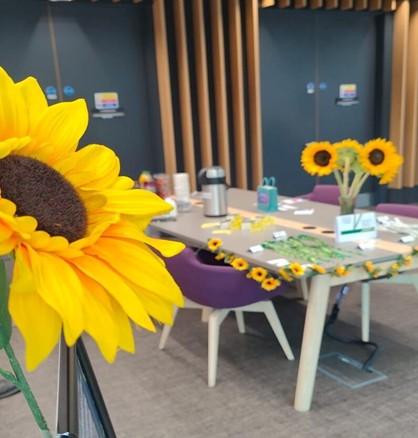
This is an initiative we are rolling out across the Centre and Cancer Research UK Manchester Institute. The launch event, which took place on Tuesday 22nd July and was spearheaded by our HR Officer Rebecca Grant, introduced our staff and students to the Hidden Disabilities Sunflower initiative.
Sunflowers and supporter lanyards are now available from the HR department in the Paterson Building for all Manchester Institute and National Biomarker Centre students and staff, who can also add a digital image to their email signature to further show their participation in the scheme.
I am a champion of the Hidden Disabilities Sunflower and proud to wear the supporter lanyard. It’s important to highlight this campaign as everyone should be able to work in an environment that promotes inclusivity and understanding.
Rebecca Grant, HR Officer

This initiative follows on from training we held earlier this year, “understanding autism in the workplace” which was provided by the Autism Society, and is part of our commitment to creating a more inclusive and supportive environment for all our staff and students.
You can find out more about the Hidden Disabilities Sunflower on their website.
